Thermally Broken vs Standard Aluminium Frames: Is It Worth It?
Aluminium makes slim, strong, low-maintenance window frames. It also conducts heat extremely well. A thermal break deals with that weakness — but it adds cost, so it is worth knowing when it earns its place.
What a thermal break actually is
A standard aluminium frame is a continuous piece of metal from the outside face to the inside face. Heat moves through it easily, in whichever direction the temperature difference pushes it.
A thermally broken frame is made in two parts — an outer section and an inner section — joined by a strip of low-conductivity material, usually a reinforced polyamide. Aluminium conducts heat hundreds of times more readily than that strip, so the break interrupts the easy path through the frame.
What changes when you add one
- The whole-window U-value improves. Ratings are calculated for frame and glass together, so a better frame lifts the figure for the entire window.
- The inside of the frame stays closer to room temperature. It feels less cold to the touch in winter and radiates less heat in summer.
- Condensation on the frame is reduced. A warmer internal surface is less likely to drop below the dew point on cold mornings.
- Double glazing works as intended. In a conductive frame, heat simply bypasses a high-performing glass unit around its edges.
Standard and thermally broken frames compared
| Standard aluminium | Thermally broken aluminium | |
|---|---|---|
| Frame construction | Continuous aluminium section | Inner and outer sections joined by an insulating strip |
| Heat flow through the frame | High | Substantially reduced |
| Condensation on the frame | More likely in cold weather | Less likely |
| Typical glazing | Single or double glazing | Double glazing, often with Low-E glass |
| Relative cost | Lower | Higher |
When the upgrade is usually worth it
Cooler climate zones
Melbourne sits in NCC climate zone 6, with zones 7 and 8 covering cooler and alpine parts of Victoria. The longer the heating season, the more a conductive frame costs in comfort and running costs.
Designs with a lot of glass
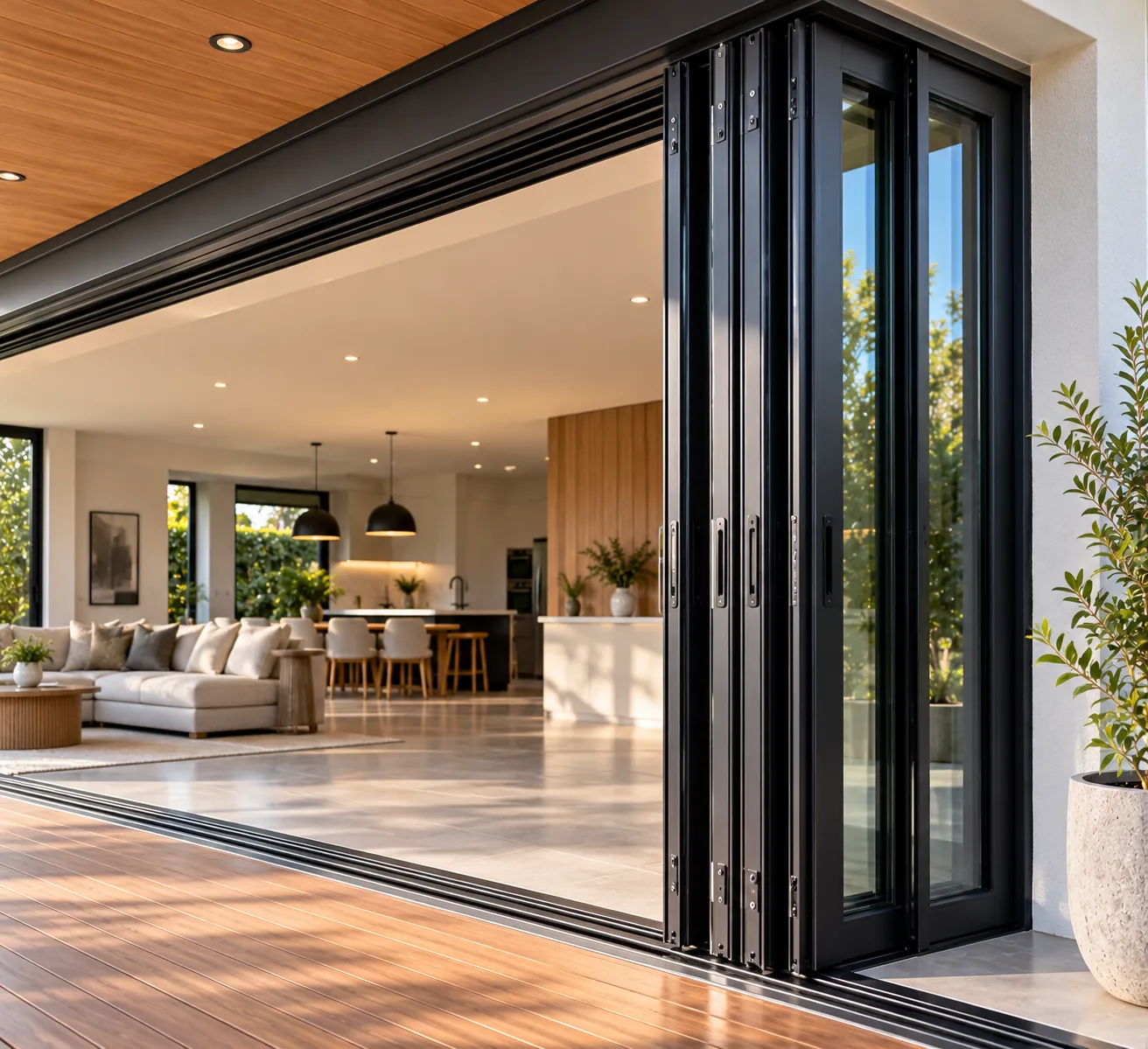
Full-height glazing, wide stacking doors and window walls put far more frame in the building envelope. The larger the glazed area, the more the frame matters.
Projects chasing a 7-star result
New homes generally need to reach the equivalent of 7 stars under NatHERS. Where the energy report nominates a low U-value, a thermally broken frame is often the most direct way to reach it without shrinking the windows.
Rooms prone to condensation
Bedrooms, bathrooms and south-facing rooms are where frame condensation shows up first.
When a standard frame may be enough
In milder climates, on well-shaded elevations, or where glazing is a small share of the wall area, the energy report may be satisfied with standard frames and good glass. Orientation, shading and glass selection can do as much as the frame in those cases. The honest answer is that it depends on the design — which is why the assessor's figures should drive the decision rather than a rule of thumb.
Judge the window, not the frame: ask for the rated U-value and SHGC of the complete configuration.
Questions to ask before you order
- What U-value and SHGC does my energy report nominate for each opening?
- What are the rated whole-window figures for the product and glass combination being quoted?
- Is the thermally broken option available in the window and door formats my design uses?
- What is the price difference across the whole order, not just one window?
Our energy efficiency page covers thermal breaks, double glazing and Low-E glass in more detail. If you already have an energy report, send it through with your enquiry and Windora can quote against the nominated figures.
General information only. Performance varies between window systems and configurations. Specific values, availability and suitability for your project must be confirmed with Windora and against the requirements set by your energy assessor and building surveyor.